
When Do You Need a Procurement Consultant? 5 Warning Signs
You don't necessarily need a full-time procurement team. But if any of the situations below sound familiar, you might be leaving significant money on the table—and creating unnecessary financial risk—without realizing it.
Most mid-sized companies we work with discover they can reduce operating costs by 15-30% once they bring in procurement expertise. The question isn't whether you can afford to hire help; it's whether you can afford not to.
Here are five warning signs that bringing in a procurement consultant could transform your bottom line.
1. Are You Renewing Contracts Without Negotiating?
If your team automatically renews software licenses, facility management contracts, or insurance policies when they come up for renewal, you're likely overpaying—sometimes significantly.
Here's what typically happens: Someone in your organization receives a renewal notice. They're busy with their core responsibilities, the vendor relationship seems fine, and the last thing they want is the hassle of switching providers or negotiating terms. So they approve the renewal, often with an automatic 3-5% price increase built in.
Multiply this across dozens of contracts over several years, and those "small" increases compound into substantial overspending.
What procurement expertise provides:
A procurement consultant approaches renewals strategically. They benchmark your current pricing against market rates, identify leverage points in the relationship, and negotiate from a position of strength. Even when you're satisfied with a vendor's service, renegotiating terms can yield immediate savings—often 10-20% on the contract value.
More importantly, procurement consultants know when it makes sense to go to market versus when to renegotiate with your incumbent. They handle the entire process while your team stays focused on running the business.
Learn more about our strategic sourcing and RFP management services.
2. Is Your Indirect Spend Completely Unmanaged?
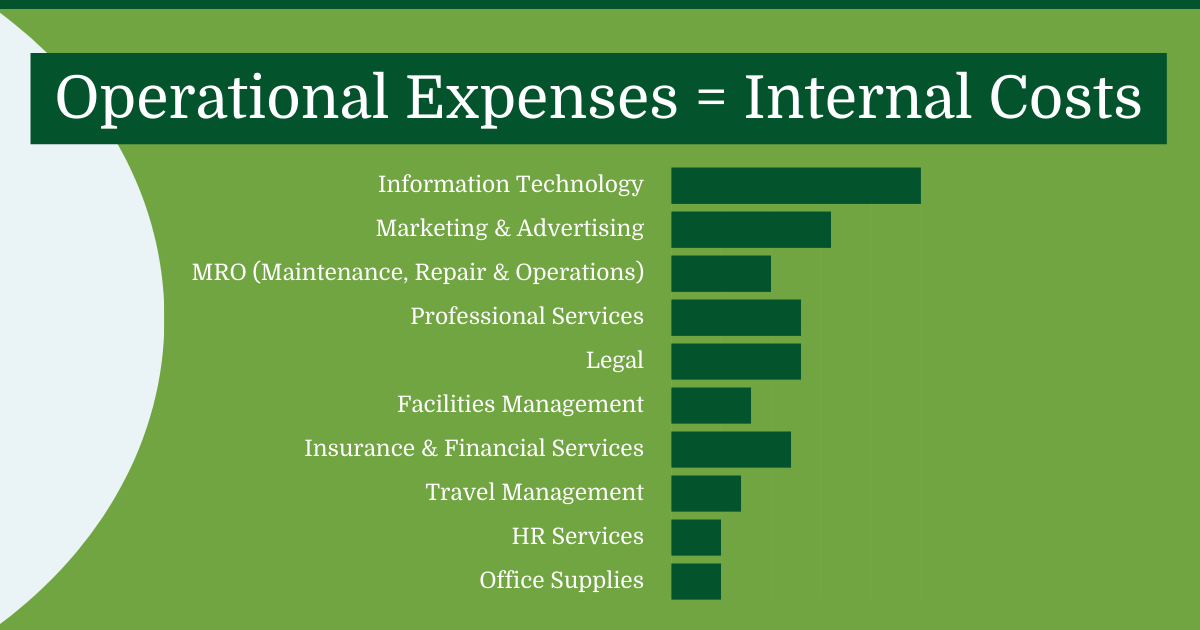
When was the last time anyone reviewed your spending on information technology (IT), marketing services, consulting, office supplies, facilities management, or professional services? If the answer is "never" or "I'm not sure," you have an indirect spend management problem.
Unlike direct materials that go into your products—which most companies track carefully—indirect spend tends to fly under the radar. These are the operating expenses that keep your business running: marketing agencies, software subscriptions, consulting services, travel, facilities, and dozens of other categories that don't show up on anyone's dashboard.
The problem is that indirect spend typically represents 15-25% of a company's revenue, yet it's often managed department by department with no centralized oversight. Marketing buys what marketing needs. IT buys what IT needs. Nobody's looking at the big picture or asking whether you're getting the best value.
What procurement expertise provides:
A procurement consultant starts with a comprehensive spend analysis to understand where your money is actually going. They identify spending patterns, consolidation opportunities, and areas where you're likely overpaying.
More importantly, they categorize your spend and prioritize where to focus first—targeting the categories with the highest savings potential and the quickest wins. You don't need to tackle everything at once; you need a strategic approach that delivers measurable results.
Common findings in indirect spend reviews:
- Multiple departments buying the same services from different vendors at different prices
- Legacy contracts with outdated pricing that nobody's questioned in years
- Duplicate software subscriptions across the organization
- Missing volume discounts because spending is fragmented
- Unnecessary premium services that could be replaced with standard offerings
If you don't have visibility into your indirect spending patterns, you're almost certainly overspending. A procurement opportunity assessment can identify exactly where and by how much.
3. Do You Make Major Purchases Without Competitive Bids?
Your team needs to select a new software platform, engage a consulting firm, or choose a facilities management provider. The project manager gets a few recommendations from colleagues, maybe looks at a couple of websites, and then starts negotiating with whoever seems like the best fit.
Sound familiar?
This approach—which we call "negotiated procurement"—might seem efficient, but it's actually costing you money and creating risk.
Why this matters:
When you approach a single vendor (or a small shortlist based on referrals), you have no idea if their pricing is competitive. You might be paying 20-30% more than market rates simply because you didn't create competition for the business.
Beyond pricing, you're also missing out on:
- Understanding the full range of solutions available in the market
- Identifying innovative approaches you hadn't considered
- Establishing clear evaluation criteria before vendors start selling to you
- Creating negotiating leverage through competition
- Documenting a defensible selection process
What procurement expertise provides:
A procurement consultant manages the entire RFP process on your behalf—from defining requirements and identifying qualified vendors to evaluating proposals and negotiating final terms. They know how to structure competitive processes that deliver better results without overwhelming your team.
Critically, they help you avoid common pitfalls: vague requirements that lead to incomparable proposals, evaluation criteria that favor incumbents, or negotiation strategies that leave money on the table.
If you're making purchases over $100,000 without a structured competitive process, you need procurement help. The savings on a single well-managed RFP often cover the cost of consulting support for an entire year.
4. Are You Uncertain About Your Spending Baseline?
Quick question: What did your company spend on IT last year? How about marketing? Facilities management? Professional services?
If you can't answer these questions with confidence—or if the data exists but takes days to compile from multiple systems—you have a spending visibility problem.
You can't manage what you can't measure. And you certainly can't identify savings opportunities if you don't know where your money is going in the first place.
Why this happens:
Most mid-sized companies have spending data spread across multiple systems: ERP systems, credit card statements, individual department budgets, and various approval workflows. Pulling it all together requires manual effort that nobody has time for, so it simply doesn't get done.
The result? You're flying blind on a significant portion of your operating expenses.
What procurement expertise provides:
A procurement consultant consolidates your spending data and creates a clear baseline of where your money is going. They categorize expenditures in meaningful ways, identify your top suppliers by spend, and flag unusual patterns or anomalies.
This isn't just about data analysis—it's about translating spending data into actionable insights. Where are you likely overpaying? Which supplier relationships need attention? What categories should you prioritize for savings initiatives?
Our procurement opportunity assessments typically identify 10-25% cost reduction opportunities across their operational spend categories. Actual savings depend on current procurement maturity, spend volume, and category mix.
5. Are You Growing Fast Without Procurement Infrastructure?
Your company is growing—revenue is up, headcount is increasing, and you're expanding into new markets or product lines. That's excellent news.
But here's what often happens: As companies grow quickly, spending grows even faster. Departments make purchase decisions independently to keep up with the pace. New suppliers get added constantly. Contract terms vary wildly. And nobody's paying attention to the procurement function because everyone's focused on growth.
By the time you realize you have a spending control problem, you've already created significant organizational complexity and financial risk.
Common symptoms of this issue:
- Department heads have signing authority but no procurement training
- Your vendor list has doubled in the past two years
- Standard contract terms don't exist—everything is negotiated ad hoc
- Software spending in particular has exploded with little oversight
- Month-end close takes longer because of accrual issues and missing invoices
What procurement expertise provides:
A Fractional CPO can establish proper procurement infrastructure without forcing you to slow down or hire a full-time team. They set up the processes, policies, and controls you need to scale efficiently while maintaining financial discipline.
This includes:
- Approval workflows that balance speed with control
- Vendor onboarding and management processes
- Standard contract templates and terms
- Spending controls appropriate to your risk tolerance
- Supplier consolidation strategies that improve both pricing and efficiency
Think of it as building the procurement function you'll need in three years—but getting the benefits today. A Fractional CPO provides the strategic leadership to professionalize your procurement practices without the cost or commitment of a permanent hire. If your organization needs deeper structural change, our procurement transformation services can help you build the processes, policies, and controls that scale with your growth.
If your spending is growing faster than your ability to manage it, you need procurement leadership now—before the problem becomes exponentially harder to fix.
What If Multiple Warning Signs Apply?
If you recognized your company in two or more of these scenarios, you're not alone. Most mid-sized organizations operate without dedicated procurement expertise—and it's costing them significantly.
The good news? You don't need to build an entire procurement department or hire a full-time team. You need targeted expertise applied strategically where it will deliver the greatest impact.
That's exactly what procurement consulting provides: experienced professionals who can assess your situation, identify your highest-value opportunities, and execute improvements that deliver measurable results—typically within the first 60-90 days.
Frequently Asked Questions
When should a company hire a procurement consultant?
Companies typically benefit from procurement consulting when they're experiencing uncontrolled spending growth, lack procurement expertise internally, are preparing for significant sourcing projects, or want to reduce operating costs without adding headcount. If you're a mid-sized company ($50-500M revenue) without a dedicated procurement team, you're likely a strong candidate for procurement consulting.
How do I know if I need procurement help?
Look for these warning signs: automatic contract renewals without negotiation, no visibility into indirect spending patterns, major purchases made without competitive bids, uncertain spending baselines, or rapid company growth without corresponding procurement infrastructure. If any of these apply, procurement consulting could deliver significant value.
What's the difference between a fractional CPO and a procurement consultant?
A procurement consultant typically focuses on specific projects—strategic sourcing initiatives, spend analysis, or process improvements. A Fractional CPO provides ongoing strategic leadership for your procurement function on a part-time basis, establishing policies, managing supplier relationships, and overseeing your organization's overall procurement performance. Many companies start with project-based consulting and transition to fractional CPO support as they recognize the ongoing value.
How much can a procurement consultant save my company?
Most clients achieve 15-30% cost savings in the categories we target, though results vary by industry, spending patterns, and current procurement maturity. The key is focusing on high-impact areas first—typically indirect spend categories that haven't received procurement attention. A procurement opportunity assessment can identify your specific savings potential.
Do we need to hire a full-time procurement team?
Not necessarily. Many mid-sized companies get better results from flexible procurement consulting support—whether that's project-based consulting for specific initiatives or fractional CPO services for ongoing leadership. You get experienced expertise scaled to your actual needs without the overhead of building an internal department.
How long does it take to see results from procurement consulting?
Quick wins are typically identified within the first 30 days through spend analysis and opportunity assessment. Measurable savings from contract renegotiations or competitive sourcing usually materialize within 60-90 days. Longer-term transformation initiatives—establishing procurement processes, implementing systems, or building organizational capability—deliver sustained benefits over 6-12 months.
Ready to Stop Overpaying?
If you don't have a procurement team, we can help—whether you're exploring savings or already have an RFP to run. Most projects deliver 15–25% savings and free up your team from 100+ hours of administrative work.

Andrew Wolfe
Founder & CEO | Wolfe Procurement